
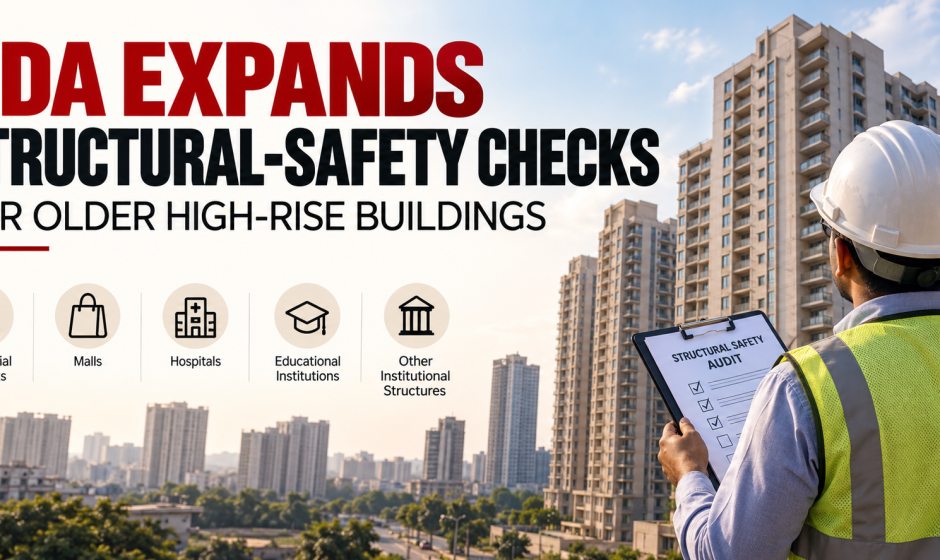

The Delhi Development Authority has made structural safety audits mandatory for certain high-rise buildings constructed before 2001, following a series of building failures and safety concerns. Owners have a three-month period to complete the required assessment.
The requirement is notable because the safety net is not limited solely to tall buildings. Structures below 15 metres that experience heavy public footfall can also fall within the audit framework, reflecting the principle that occupancy and usage can create significant safety exposure.
A structural audit typically helps identify issues that may not be obvious during routine visual maintenance, including deterioration, load-related concerns and defects that require engineering intervention. For older housing societies, the policy is a reminder that preventive maintenance should be treated as an ongoing asset-management responsibility.
The measure also has implications for property value. Buildings with clear maintenance records and timely safety compliance can offer greater confidence to residents and prospective buyers than properties where structural concerns remain undocumented.Key takeaway: The development is relevant to Delhi-NCR property stakeholders because it can influence how buyers, developers, investors or authorities evaluate projects, compliance, capital, infrastructure or market demand.