

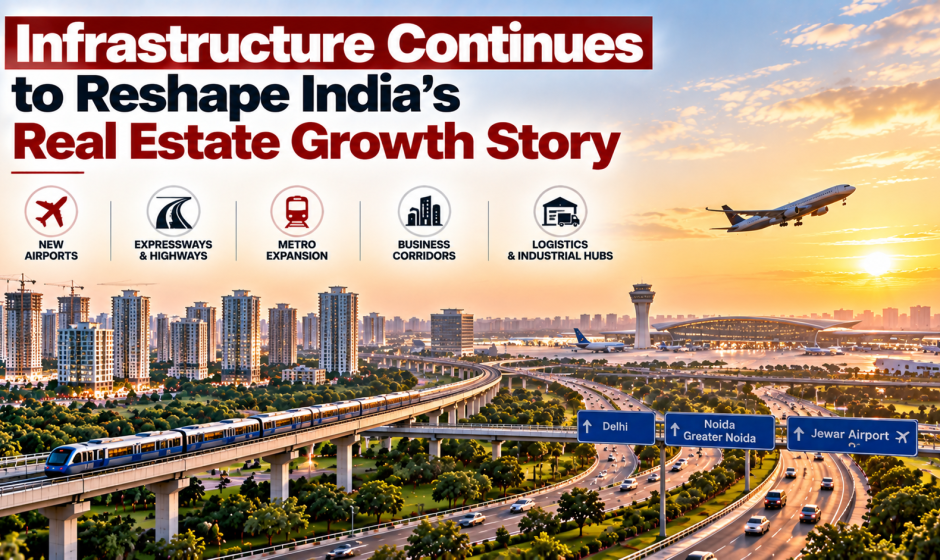
Infrastructure development has become one of the most important drivers of India’s real estate market. New highways, metro systems, airports, railway networks and business corridors are changing how cities expand and where people choose to live and work.
Improved connectivity can transform previously developing locations into established real estate destinations. Better roads and public transport reduce travel times, while proximity to employment hubs can increase the attractiveness of surrounding residential and commercial developments.
Airports are another major catalyst. Large airport projects can encourage the development of hotels, offices, logistics parks, retail centres and housing around emerging economic zones. Similarly, new expressways can improve access between residential markets and major employment centres.
Metro expansion is particularly significant for residential real estate. Areas connected to efficient public transportation can become more attractive to both end-users and tenants. Developers also increasingly highlight transit connectivity when marketing new projects.
The impact of infrastructure, however, is rarely immediate. Investors need to distinguish between completed infrastructure and projects that are still proposed or under construction. Delays, changes in alignment and implementation timelines can affect expected returns.
This makes location-level research important. A property may benefit from infrastructure only if the proposed development is realistically accessible and creates meaningful connectivity.
As India’s urban population grows, infrastructure-led development is likely to remain a central theme in real estate. New growth corridors are expected to emerge around transport networks, employment centres and economic hubs.
For homebuyers and investors, the key is not simply to follow infrastructure announcements but to understand how a particular project could influence accessibility, demand, rental markets and long-term development in the surrounding area.